BPC-157
Price range: $55.99 through $854.91
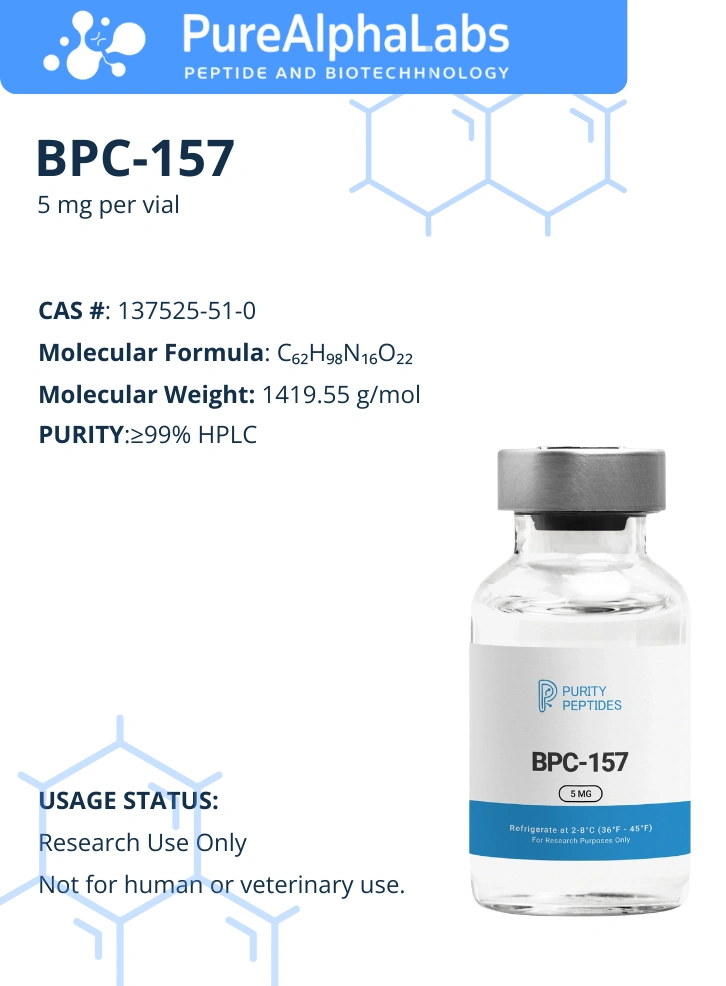
BPC-157 is a recovery-support peptide designed to promote tissue resilience, gut balance, and overall physical restoration. Known for its targeted action, it is widely used in wellness routines focused on recovery, mobility, and long-term structural support.
PRODUCT OVERIVEW
BPC-157, also known as Body Protection Compound-157, is a synthetic peptide derived from a naturally occurring protective protein found in human gastric juice. It has been extensively studied for its role in cellular signaling, tissue integrity, and regenerative processes. BPC-157 is notable for its ability to influence multiple biological pathways involved in cellular repair rather than acting through a single receptor system.
KEY FEATURES THAT MAKES BPC-157 STAND OUT
- Synthetic pentadecapeptide derived from a naturally occurring gastric protein.
- High biological stability in enzymatic environments.
- Multi-pathway mechanism of action.
- Non-hormonal and non-growth factor–based activity.
- Derived from well-characterized peptide frameworks.
- Supported by extensive preclinical research.
CHEMIAL MARKUP
-
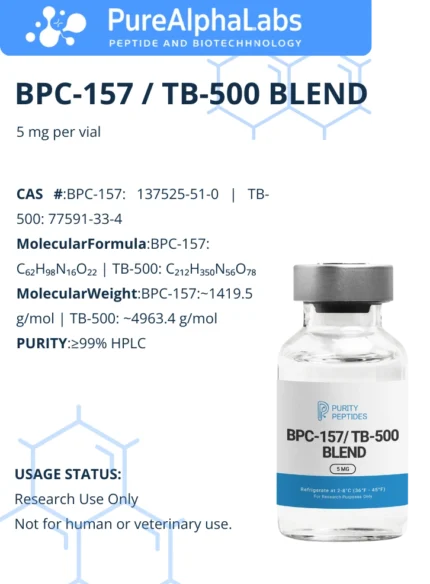
Peptide Name: BPC-157 (Body Protection Compound-157)
-
Molecular Formula: C₆₂H₉₈N₁₆O₂₂
-
Molecular Weight: ~1419.5 g/mol
-
Peptide Class: Cytoprotective and regenerative research peptide
RESEARCH & CLINICAL STUDIES
Early studies explored BPC-157’s effects on tissue integrity and cellular resilience across multiple experimental models. Research findings suggested enhanced cellular organization and repair responses without stimulation of abnormal cell growth, indicating a regulated biological mechanism rather than nonspecific cellular activation. Researchers concluded that BPC-157 may influence fundamental cytoprotective pathways involved in maintaining tissue homeostasis.
SAFETY AND TOLERABIITY
BPC-157 demonstrated a predictable tolerability profile when evaluated under controlled research conditions. Reported responses were generally dose-dependent and transient. No long-term adverse systemic or neurological outcomes were identified within the scope of available studies.
NOTES
- For Research Use Only.
- Not for use in humans or animals.
- Not for diagnostic or therapeutic purposes.
How to Use:
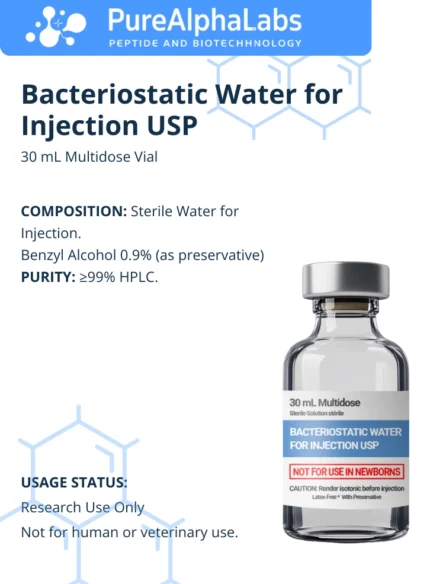
In laboratory research, BPC‑157 powder is reconstituted with sterile or bacteriostatic water and typically administered via controlled subcutaneous or intramuscular injection per experimental protocol; dosing and schedule depend on study design.
Common Side Effects:
Animal studies and anecdotal reports suggest mild, transient effects such as injection‑site irritation, nausea, dizziness, headaches or appetite changes, but comprehensive human safety data are limited.
Who Should Avoid:
BPC‑157 should be used only in controlled research environments and avoided outside them; individuals with active cancer, vascular disease, pregnancy, breastfeeding or serious health conditions are typically excluded in research safety protocols.
Lab Testing / Quality:
Research‑grade BPC‑157 is supplied as high‑purity lyophilized peptide powder with analytical verification (e.g., HPLC, COA) to ensure consistency and reproducibility in experiments.
Storage:
Unopened lyophilized BPC‑157 should be stored in a cool, dry place or freezer (e.g., −20 °C); after reconstitution with sterile water, keep refrigerated (2–8 °C) and protect from light and moisture to maintain stability per lab protocol.
1. What is BPC-157 ?
BPC-157 10mg is a synthetic peptide derived from a naturally occurring protein in the stomach. It is primarily studied for its powerful tissue repair, regenerative, and healing properties, making it popular in research related to injury recovery and overall wellness.
2. How does BPC-157 work?
BPC-157 works by:
- Promoting angiogenesis (formation of new blood vessels)
- Stimulating collagen synthesis for tissue repair
- Protecting and regenerating muscles, tendons, ligaments, and gut lining
- Reducing inflammation and oxidative stress in damaged tissues
This combination of effects makes it highly effective for tissue regeneration and recovery research.
3. How long does it take to see results?
- Tissue and joint repair: 1–3 weeks
- Gut healing or systemic regeneration: gradual improvements over several weeks
Consistency and proper dosing are key to optimal outcomes.
4. Is BPC-157 safe?
BPC-157 is considered safe for research and experimental purposes. Responsible use and proper guidance are recommended, particularly for higher dosages like 10mg.
5. How should BPC-157 be stored?
- Store reconstituted vials in a cool, dry place
- Refrigerate after reconstitution
- Protect from heat, moisture, and direct sunlight