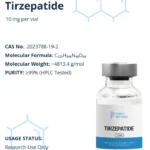
Tesamorelin
Price range: $140.00 through $1,330.00
Tesamorelin 10mg is a high-purity synthetic peptide designed to support research into growth hormone–releasing hormone (GHRH) pathways, metabolic signaling, and fat-regulation mechanisms. It is widely utilized in controlled scientific and laboratory environments where accuracy and consistency are essential.
PRODUCT OVERVIEW
Tesamorelin is a synthetic peptide analog of growth hormone–releasing hormone (GHRH) designed to stimulate the natural release of growth hormone from the anterior pituitary gland. It has been extensively studied for its interaction with GHRH receptors, which play a central role in regulating growth hormone secretion, metabolic signaling, and endocrine balance. Tesamorelin is distinguished by its ability to activate physiological hormonal pathways rather than delivering exogenous hormones.
KEY FEATURES THAT MAKES TESAMORELIN STAND OUT
- Synthetic growth hormone–releasing hormone (GHRH) analog.
- High receptor selectivity for pituitary GHRH receptors.
- Centrally mediated endocrine mechanism of action.
- Structurally modified for enhanced stability.
- Derived from well-characterized peptide frameworks.
- Supported by both preclinical and clinical research.
CHEMICAL MARKUP
- Peptide Name: Tesamorelin
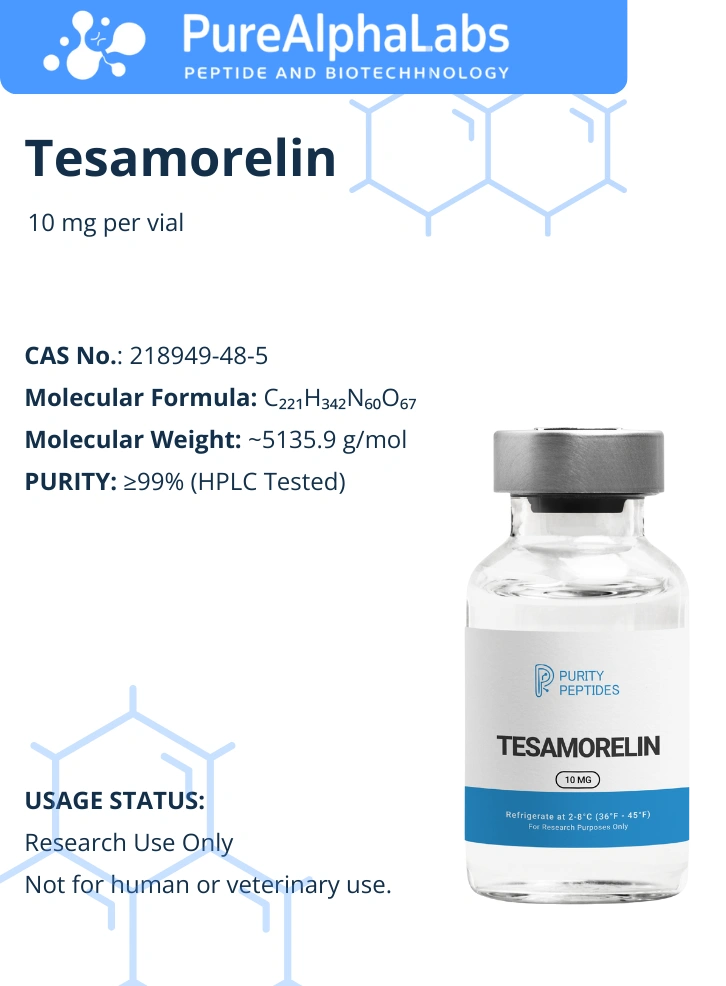
- Molecular Formula: C₂₂₁H₃₆₆N₇₂O₆₇S
- Molecular Weight: ~5135.9 g/mol
- Peptide Class: Growth hormone–releasing hormone (GHRH) analog
RESEARCH & CLINICAL STUDIES
Early research evaluated Tesamorelin’s effects on growth hormone secretion in controlled laboratory models. Findings demonstrated a marked increase in pulsatile endogenous growth hormone release without continuous pituitary overstimulation. Researchers observed that Tesamorelin preserved natural hormonal rhythms, indicating a regulated endocrine response rather than nonspecific stimulation.
These results supported the role of Tesamorelin in modulating central hormonal signaling pathways involved in growth hormone regulation.
SEAFTY AND TOLERABILITY
Tesamorelin demonstrated a predictable tolerability profile when evaluated under controlled research conditions. Observed responses were generally dose-dependent and transient. No long-term adverse effects on pituitary function or endocrine signaling were identified within the scope of available studies.
NOTES
- For Research Use Only.
- Not for use in humans or animals.
- Not for diagnostic or therapeutic purposes.
How to Use:
In laboratory research settings, Tesamorelin is supplied as a lyophilized peptide and is reconstituted with sterile or bacteriostatic water prior to use. It is handled and applied strictly according to experimental protocols under controlled laboratory conditions, with dosing parameters defined by study design.
Common Side Effects:
Research contexts report generally mild and transient effects when Tesamorelin is handled appropriately. Potential observations may include localized irritation at the site of application, temporary redness, or mild discomfort; significant adverse effects are uncommon in controlled research environments.
Who Should Avoid:
Tesamorelin is intended for research use only and is not approved for direct human or veterinary consumption. It should not be used outside regulated laboratory settings or by individuals with unverified health conditions.
Lab Testing / Quality:
Research-grade Tesamorelin is manufactured under strict quality control standards to ensure high purity, consistency, and reliability. Each batch undergoes analytical testing and is supplied with appropriate documentation, such as Certificates of Analysis (COA), to support reproducible experimental research.
Storage:
Store unopened lyophilized Tesamorelin in a cool, dry, and dark environment, typically at −20 °C. After reconstitution, maintain sterile handling practices and store under refrigerated conditions as directed by laboratory protocols to preserve stability and integrity.
1. What is Tesamorelin?
Tesamorelin is a synthetic peptide analogue of growth hormone–releasing hormone (GHRH). In research settings, it is studied for its role in stimulating endogenous growth hormone release and its effects on metabolic and cellular processes.
2. How does Tesamorelin work in research studies?
Tesamorelin binds to GHRH receptors in the pituitary gland, promoting the release of growth hormone. This mechanism allows researchers to study downstream effects related to metabolism, tissue regulation, and physiological signaling pathways.
3. What is Tesamorelin used for in laboratory research?
In controlled research environments, Tesamorelin is investigated for its potential effects on fat metabolism, growth hormone regulation, and metabolic health, as well as its role in endocrine and cellular studies.
4. Is Tesamorelin approved for human use?
No. Tesamorelin sold in this form is intended for research use only and is not approved for direct human or veterinary consumption. It must only be used in regulated laboratory settings.
5. Are there any known side effects in research contexts?
Research reports generally note mild and transient effects when Tesamorelin is handled properly. Observations may include temporary irritation at the point of application; significant adverse effects are uncommon in controlled laboratory use.